Recording of a set performed by the Sonomathematische Impulsarchitekten during a exhibition about AI and Music at an historic fort close to Yao’an, Cn.
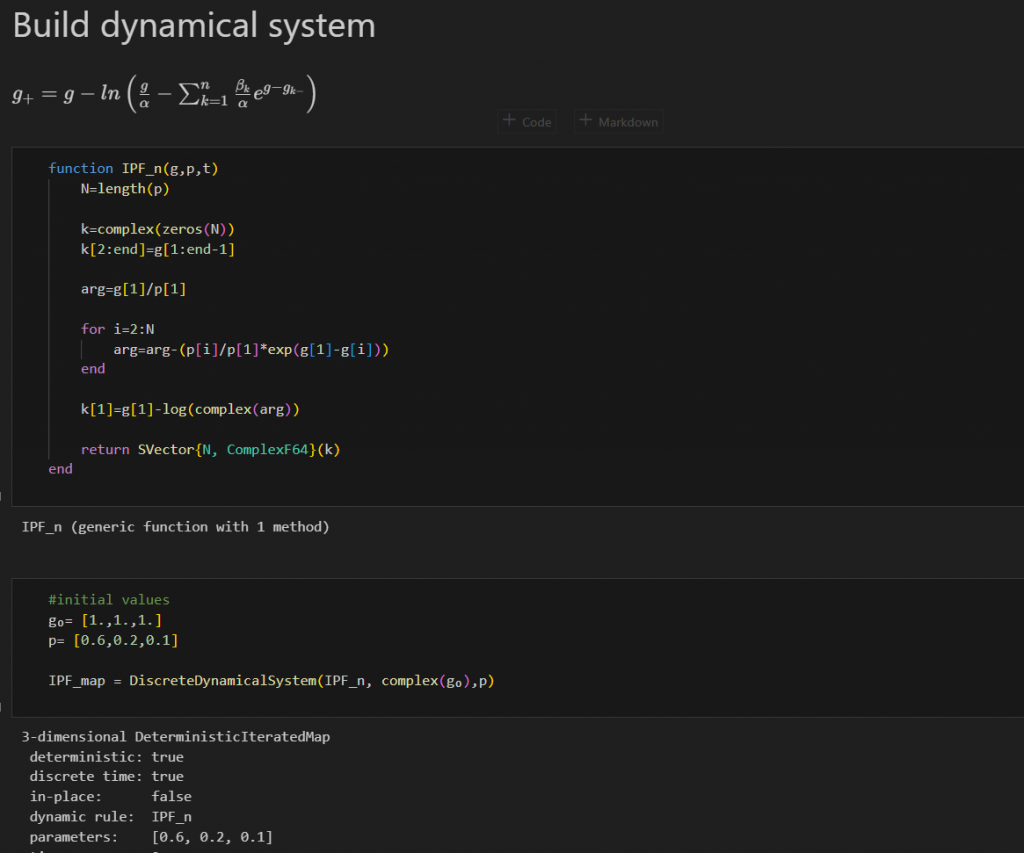
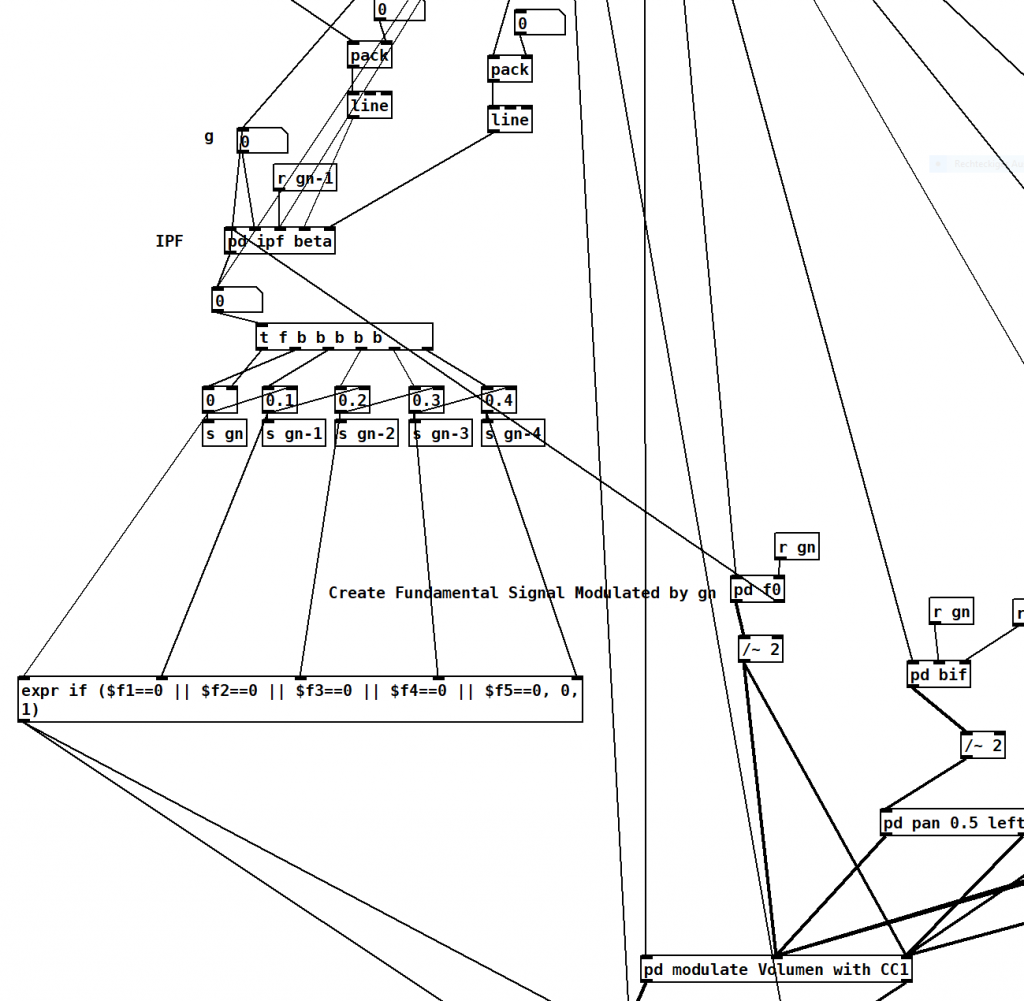
This repository provides basic scripts that apply the Impulse Pattern Formulation (IPF) in different programming languages. Thus, it helps to discover the IPF for the first time:
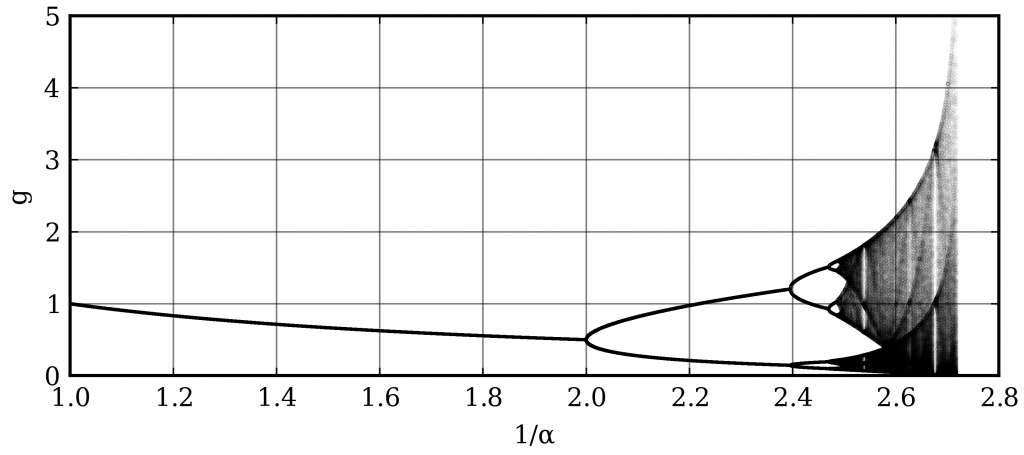
Julia scripts can be used to investigate the mathematical behavior of the IPF concerning stability and limits, similar to what was done by Linke et al.
Python scripts allow the first approaches in using the IPF as a (non-real-time) Synthesizer.
PureData patches can be used to introduce real-time synthesis utilizing the IPF.
This repository provides three different Pure Data scripts showing the Impulse Pattern Formulations (IPF) capabilities for Model-Based Sonification (MBS).
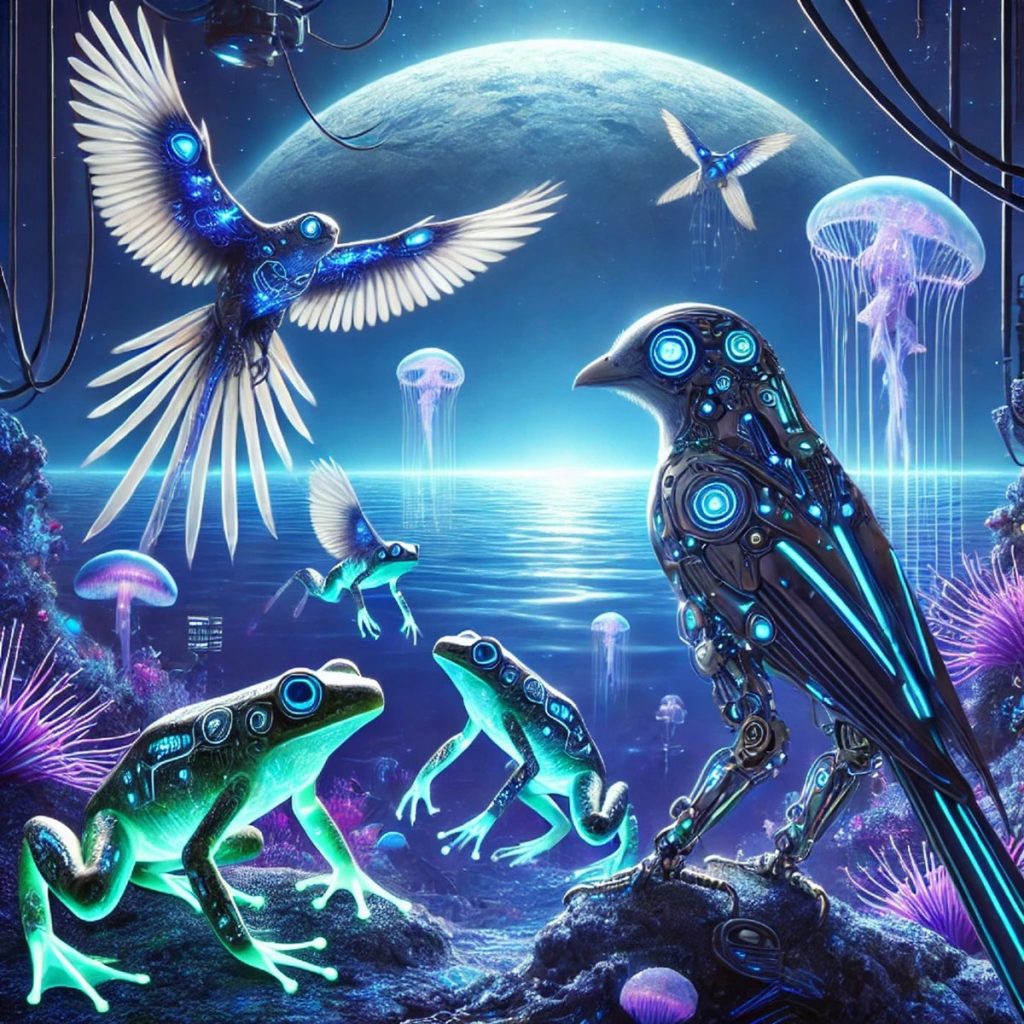
The journey of a jungle of futuristic living beings takes them to the Jupiter moon Europe, into its ocean beneath the icy crust, where they meet the spirits living there. After communicating, interacting, and discussing, the spirits agree to a journey back to a future earth.
The IPF is a sound, rhythm, and musical form synthesis method from which most of this album’s sounds and textures are synthesized.
Recording of a set performed for H7 Club at the Blurred Edges festival 2024 in Hamburg, Germany.
Take your tour through alternative kinds of beings singing their songs.
Most sounds are created by us playing all kinds of PureData, C#, or Mathematica coding, misuse of dulcimer, actuators on a drum or midi guitar. Thereby, the IPF mimicks musical instrument musical acoustics, brain dynamics, or animal sound production, taken into their extremes.
The Impulse Pattern Formulation (IPF) is a versatile nonlinear modeling method that uses a simple recursive equation to describe and understand dynamic and complex patterns in musical systems. Initially inspired by musical instruments, the IPF enables both the reproduction of existing instruments and the creation of entirely new, complex sounds. Its physical-based origin and the limited number of control parameters make it particularly intuitive for musicians to interact with. Beyond synthesis, the IPF extends to diverse natural systems, including human synchronization with rhythm or pitch and joint music-making in ensembles, or even socio-political topics.
Despite its intuitive framework and potential for creative application, the nonlinear mathematical foundation of the IPF may initially seem challenging. Thus, this website provides numerous examples of how the IPF is applied to various topics. Additionally, it emphasizes hands-on exploration, offering practical insights into its implementation – not only for sound synthesis but also for modeling dynamic patterns in coupled systems and complex interactions across disciplines. This approach highlights exciting opportunities for both artistic and scientific exploration.